“Unlock Cost Savings and Optimize Efficiency with Procurement Analytics – Backed by the domain expertise of KEPLER Consulting”

Procurement Analytics unlocks hidden gems from the overwhelming volume of data that provides valuable insights to enhance decision-making and find opportunities to save your cost. Our team emphasizes expertly, supported by KEPLER Consulting‘s specialist knowledge, uses an ensemble of high-quality analytics tools to provide a bird’s-eye view of your Procurement processes.

Identification of inefficiencies in processes and opportunities to improve them by analyzing data such as supplier performance, purchase orders, and inventory management. We also perform analysis on supplier performance trend to identify opportunities for modifying the negotiation strategy, try to minimise the inventory holding cost, optimize the Procurement process to uncover savings.

We afford you the choice on a silver platter to refine your Procurement activities in line with what promises compelling commercial value.
Our Core Expertise In Procurement Analytics

  •  Ensuring data accuracy and completeness is fundamental
  • Suppliers, data is enormous and extensively distributed hence, it may result in accuracy when it comes to categorization and spend data analysis
  • There may be no contract data or no accurate data
  • Market trends and changes in laws also affect supply chain networks also market conditions and regulatory
  • Decentralized decision-making
  • It can be challenging to analyze indirect spend due to the wide range of categories and inconsistent data quality
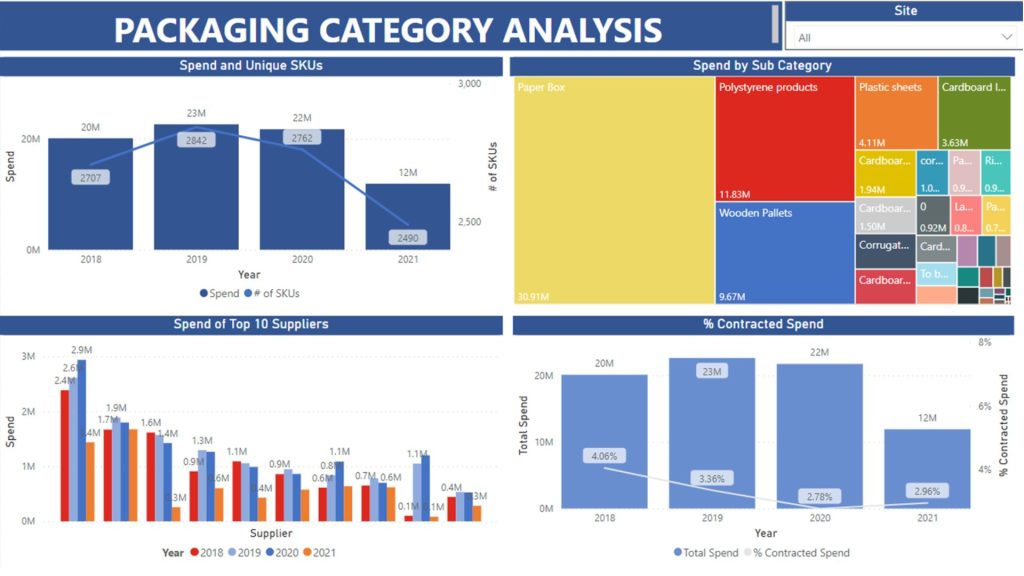
  •  Using Spend Analytics for cost-saving opportunities: You can use this technology to make a few adjustments in the spending habits that generally occur due to unnecessary expenses or poor pricing negotiations. Also, using this Spend Analytics technology, one can improve their prices negotiations by having a clear understanding of the supply and demand for a particular category of goods. And integrating that analysis with the PIC PDP (S&OP) process will ensure that you not only have the accurate data you need in front of you, but the insights it offers remain current to your business needs.

  •  Category Taxonomy: This system should be able to categorize all incoming invoices on any given day as they come in; this way, any new keywords have already been identified when it comes time to reconcile vendor data with invoices. When you have a system for regularly analyzing these data, you can with considerable accuracy predict what your next quarter, next month or your yearly budget might look like.

  • Contract Management: Accurate data is important in so many areas of spend analytics. The backend data will need to be centralized for this to work and current. To ensure that you are realizing the savings or taking advantage of possible rebates, compliance must be monitored at all times and renegotiated if necessary.

  • Analysing historical spend data helps estimate future spending trends. This can be used to improve inventory management and negotiation strategies during periods of demand, supply disruption. It can identify savings opportunities that can be won through better management and negotiation.

  • Tail Spend Analytics: Tail spending is a classic area where suppliers like to try to get one over on buyers. This involves analysing spend data at the supplier level, which can help this sort of consolidation or moving spend from other areas to this.

  • CAPEX Analytics: The speed of advancement from the expected timeline, highlighting spends that have gone over budget or comparing advantages and disadvantages with the industry, this can reduce your capital expenses and creates accountability and the opportunities for rebates through checks and balances.

  • Indirect Spend Analytics: A lot of companies are raising this to the same level as direct categories example Marketing Services. It can be helpful in identifying opportunities where to save money or make purchasing processes more efficient based on analysis done at a higher level, it allows for negotiating better prices and/or improving relationship with suppliers.


  •  Pulling in data from completely different places to provide full and correct cost estimates
  • Finding negotiation rates and coming up with new methods or tools to gather further data
  • Understanding the many factors that can influence costs and their interactions
  • Handling flawed or missing bid data from vendors
  • Discrepancy in price
  • Related to this, it is not about the provision of benchmark data, but rather the availability and accuracy of this data
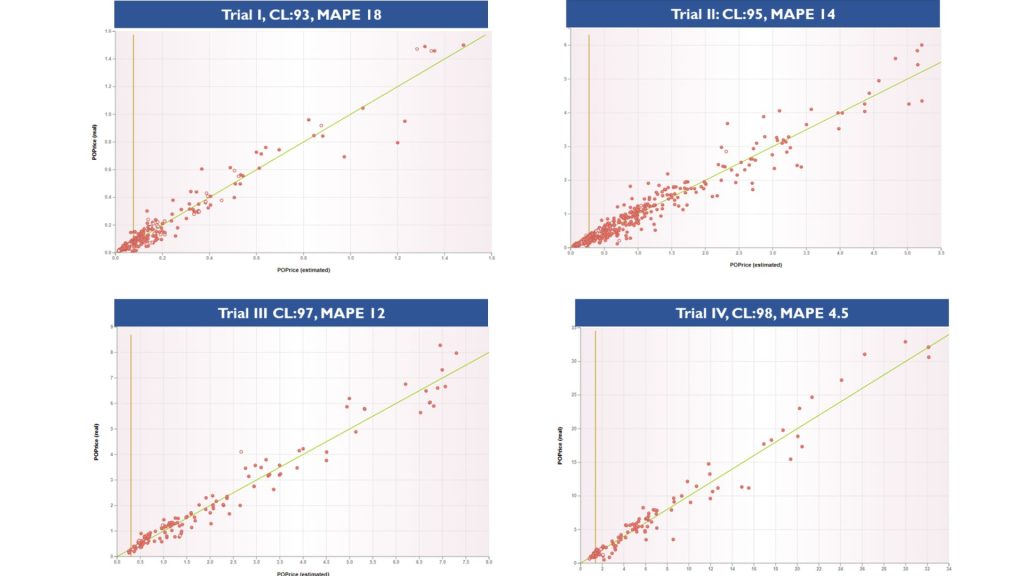
  • Optimize Your Budget: Estimating and analyzing costs can enable you to negotiate prices and use strategies for cost reduction.
  • Improve Your Negotiation Power: Negotiation can be empowered by identifying opportunities for cost saving, and a careful analytical approach is important.
  • Make Costs Predictable: Cost and usage models provide intelligence on the impact of various cost drivers on overall cost.
  • Smart Buyer with Data Bargain Better: Evaluate supplier proposals with various dimensional analysis to find the most cost-effective options.
  • Cost Management: Find pricing discrepancies and anomalies to increase cost savings opportunities.
  • Cost of Service Benchmarking: High-level cost comparisons can help pinpoint improvement areas.
  • Difficulties in getting accurate, complete data from suppliers.
  • There are way over consumption issues and identifying the core causes.
  • Balancing between more important factors like cost reduction, quality and meeting delivery schedules.
  • Establishing and tracking suitable key performance indicators (KPIs) for an improved operational view
  • Collecting and combining data from different business units or systems
  • It can be difficult finding useful and accurate benchmark data, especially for industries or markets that aren’t standardized.
  • Invoice Analytics: Realized the Experience Cost and fix the solution on to where the cost can be saved
  • Optimization of Supply Chain Analytics: To identify opportunities. Manage demand optimally, and consumption could generate cost reductions
  • Buyer Compliance Score Analytics: To rate the buyers according to their purchases and also helping them identify the suppliers that would give them confidence and could save time and money
  • PO KPI Analytics: Help businesses improve their purchasing performance by providing insights into best practices and metrics, leading to a more profitable and efficient operation
  • Pre-M&A Integration Process Analytics: To reduce costs and achieve savings by using resource capacity at its best
  • Post-M&A Integration Process Analytics: To provide insights for businesses to improve and monitor their integration progress post-merger
  • Benchmarking: Identify cost and performance improvement targets to be achieved through comparison with industry or market benchmarks.
  • Collating quotes from a variety of suppliers, each with their own unique packages and prices
  • Increase the quality of the decision-making process by considering many different factors
  • Lack of facts concerning possible suppliers, mostly in new or niche environments
  • It’s hard to haggle with suppliers when you have few choices or suppliers who are very powerful in the market.
  • RFX Analytics: Helps you choose the best supplier through a comparative analysis of supplier bids on multiple vendors based on price offerings, quality standards, and delivery times.
  • MCDM-based Vendor Analytics: Helps select the right suppliers through a data-driven approach that uses multiple criteria and multi-criteria decision-making (MCDM) methods in decision making. However, it does not limit itself to providing lists of suppliers; it is capable of finding new suppliers of similar high quality that can offer better value.
  • Supplier Selection Analytics: Deals with identifying providers and partners in a process that is based on factors like quality, availability, price, vendor reputation and speed of delivery which could be anything from long-term strategic sourcing to short-term task-oriented selection.
  • Bid Optimization Analytics: Bid optimization helps negotiate supplier bids more effectively while driving value in procurement activities.
  • Develop consistent standards to evaluate vendors for risk across a variety of categories
  • Make sure that the metrics used in the evaluation process are in line with organisation goals, and offer an accurate representation of vendor effectiveness throughout the procurement process
  • Combine data from several sources and systems in order to provide a totality of data for procurement
  • Recognizing and validating pertinent data sources and aspects for predicting the failure of suppliers
    • Keeping up with new regulations and ensuring that a flexible compliance monitoring arrangement is maintained so that we can adapt to new regulations
  • Build a system by which possible instabilities and risks are being communicated across divisions and stakeholders also
  • Finding a balance for risk mitigation strategies vs cost savings and supplier success while ensuring the best interest for the business.
  • Vendor Risk Scoring & Vendor Risk Scoring Analytics: To automate scoring and gain real-time sights into vendor risk by checking vendor risk based on money health, rule following, and name factors
  • Performance Evaluation Analytics: To boost vendor handling by checking vendor work, finding improvement spots, and automating work check processes
  • BI Control Towers: To allow active risk handling and smart choices by centralizing buy data for real-time watch, risk finding, and supplier work check
  • Failure Predictions Analytics: To automate failure guess processes and get real-time sights into supplier risk by using machine learning methods and guessing supplier failures
  • Compliance Monitoring: To ensure suppliers stick to laws and rules by automating rule watch and providing real-time sights into rule risks
  • Early Warning Systems: To allow timely risk fixing and business scale by using data analysis to spot risks early before they grow and setting up suitable alerts
  • Risk Mitigation Strategies: To lower buying risks by spreading supplier networks and improving risk handling practices through finding, ranking, and making plans

Industries We Serve

Our Business Cases