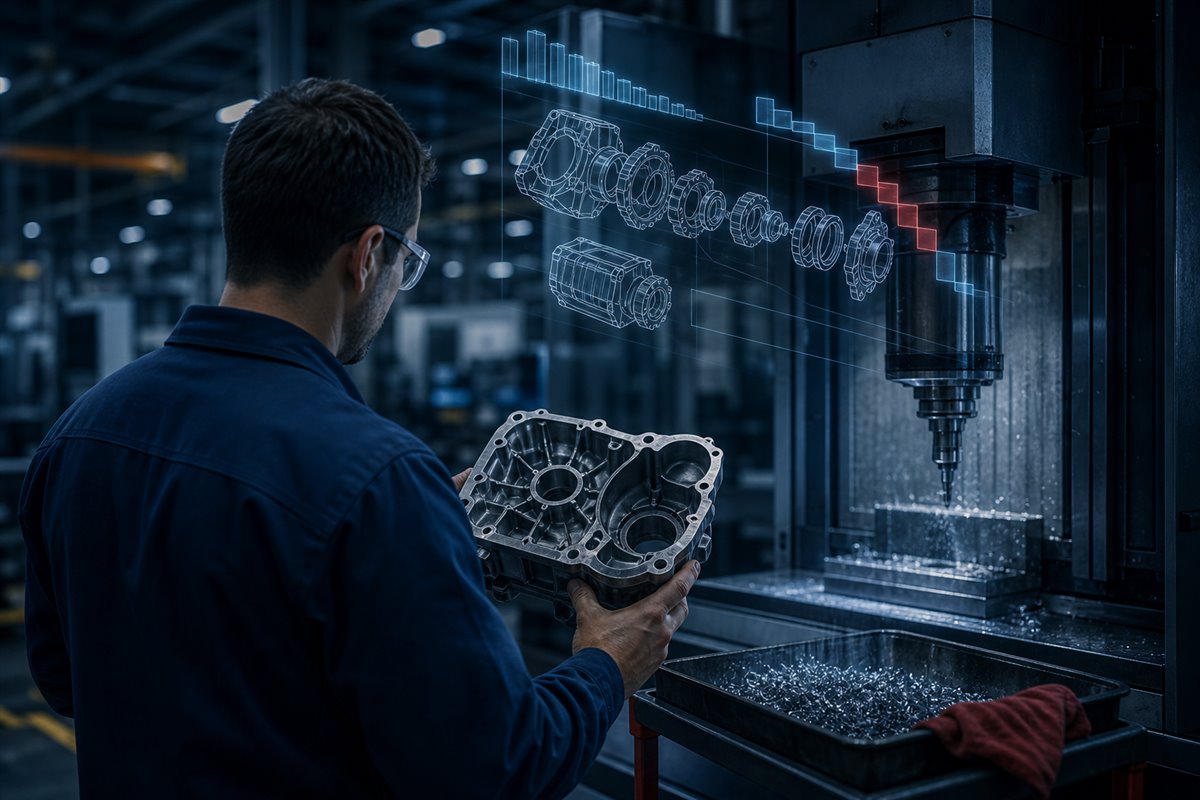
Design Optimisation

Design-for-Manufacturing
Optimization

Analytics that align design choices with the cheapest, most reliable way to actually make them.

A design that’s elegant on paper can be expensive and error-prone to build. We analyse designs against manufacturing reality — process capability, part count, tolerances, assembly — to cut manufacturing cost and quality risk before production.

The problem

When design ignores the factory

Designs that fight the process cost more and fail more.

01

Hard-to-make designs

Part count, tolerances and assembly drive avoidable cost.

02

Quality risk built in

Design choices create defects the factory can’t fix.

03

Process mismatch

Designs don’t match the capability of the process that makes them.

What we do

Design that fits the factory

Manufacturability, quantified.

Manufacturability Analysis

Manufacturability Analysis

Designs scored against process capability and assembly.

Part-Count & Tolerance

Part-Count & Tolerance

Opportunities to simplify parts and relax over-tight tolerances.

Quality-Risk Reduction

Quality-Risk Reduction

Design changes that cut defect risk at source.

What you get

What you receive

Cheaper, more reliable to build.

Manufacturability assessment

Designs scored for cost and quality risk.

Simplification opportunities

Part-count and tolerance savings identified.

DFM recommendations

Specific design changes with quantified benefit.

Book a 60-minute working session

Bring a real decision or dataset — we’ll show you how KEPLER would approach it, with no obligation.

Book a 60-minute session
Where we start

A focused, low-risk first step

We start with a short diagnostic — the decision to improve, the data behind it, and a first slice that proves value fast. See how we engage →

Sample outputs

Typical cost & VAVE artifacts you’ll receive

BOM cost modelShould-cost workbookSupplier cost benchmarkTeardown cost bridgeMaterial substitution shortlistVAVE opportunity tracker
Engagement model

Engage at the level that fits

From a quick diagnostic to a fully managed service — start small and scale as value is proven. How we engage →

How we work

How DFM optimisation works

From design to a build-ready product.

Assess

Designs are scored against process capability.

Identify

Cost and quality risks are surfaced.

Recommend

Specific simplifications are proposed.

Quantify

Each change is sized for cost and quality.

Apply

Changes feed back into the design.

Outcome

Cheaper and better to build

Manufacturing cost and defect risk cut before production.

  • Designs scored for manufacturability
  • Part count and tolerances optimised
  • Quality risk reduced at source
  • Quantified DFM changes
ManufacturabilityScored
PartsSimplified
QualityDe-risked
CostReduced
FAQ

Common questions

Do you need our process data?
Process capability and BOM data help most — we tailor the analysis to the processes you actually run.
Does this work for existing products?
Yes — DFM analysis finds savings in current products as well as new designs.
Use cases

Representative use cases

Common problems in this area, how KEPLER solves them, and the likely outcome.
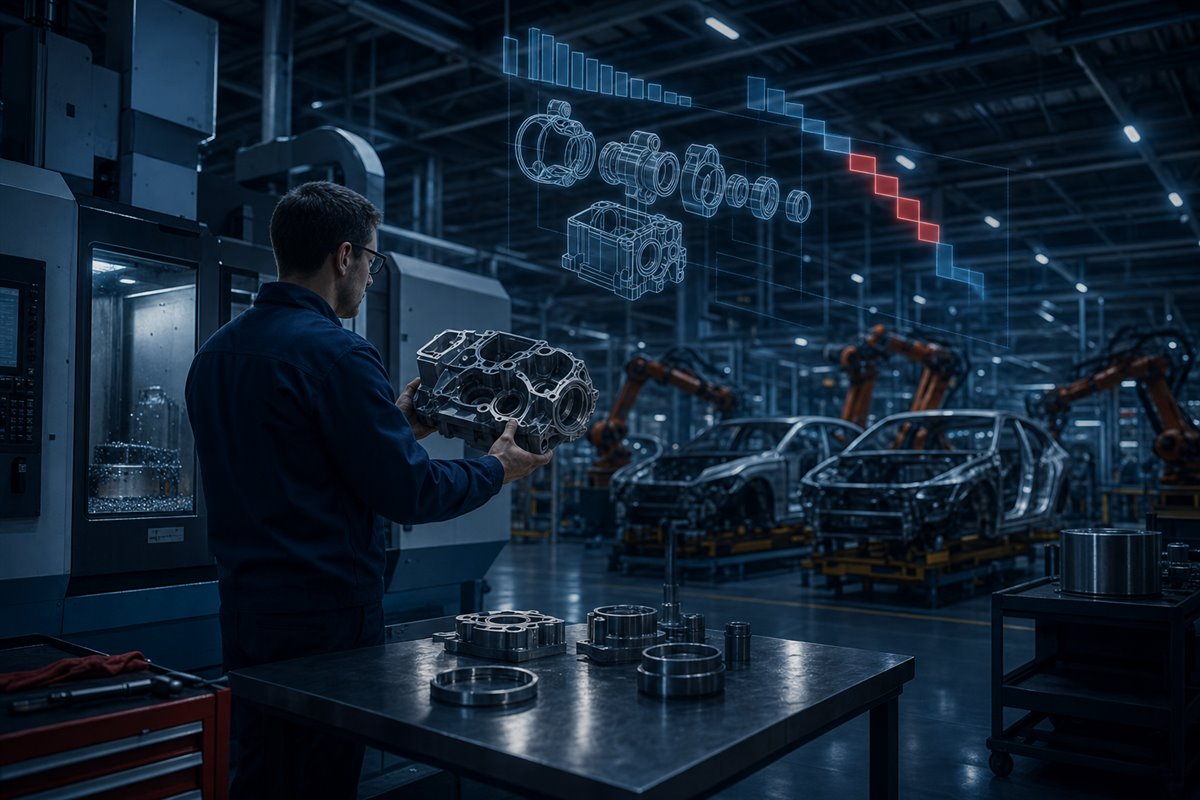
Designs are manufacturable but expensive to make
Automotive · DFM

Designs are manufacturable but expensive to make

10–20% process cost out

View details →
Scrap and rework are treated as a shop problem, not a design one
Industrial · Yield

Scrap and rework are treated as a shop problem, not a design one

2–4 pts yield gained

View details →
Assembly time is longer than the design needs it to be
Electronics · Assembly

Assembly time is longer than the design needs it to be

~15% assembly time cut

View details →

Make it cheaper to build

Share a design and we’ll show you the manufacturability savings.

Talk to our VAVE team